
Montana vehicle registration puts a plate on a car, a truck, a trailer or a motorcycle through the county treasurer’s office, and the fee follows the class and the age of the vehicle. A light vehicle under one ton pays $217 a year at four years or newer, $87 at five through ten years and $28 at eleven years or older. A plate set adds $12, a parks fee adds $9 and a state charge adds $10, and the county lines arrive on top.
Montana registration ties the plate, the title and the county record together, and this hub gathers every step in one place. The page covers the documents, the exact fee table, the county offices, the renewal cycle and the special classes, with a link to each deeper page along the way. A driver who starts here can reach every plate topic without a search.
How to Register a Vehicle in Montana
Registration starts at the county treasurer’s office for the county where the vehicle is kept. Bring the title or the manufacturer’s statement of origin, a photo ID, proof of insurance and proof of the Montana address. The clerk records the vehicle identification number, sets the class and the age line, collects the fee and issues the plate. A driver who buys from a dealer often finishes the paperwork at the lot rather than the counter.
- Title — the signed title or the origin statement.
- ID — a photo ID and proof of the Montana address.
- Coverage — proof of insurance for the vehicle.
- Office — the county treasurer where the vehicle is kept.
https://mvdmt.gov/license-plate-information/The office sets the class first, since the class decides the fee line. A light vehicle under one ton sits in one group, and a heavy truck, a motorcycle, a trailer, a motor home and a boat each sit in their own. The Montana license plate types page lists every class and the plate each one carries.
Documents the County Asks For
The documents depend on whether the vehicle is new or used. A new vehicle needs the manufacturer’s statement of origin, a bill of sale and the buyer’s identification. A used vehicle needs the signed title from the seller, and a title with a lien needs the lender’s release before the record opens. A vehicle from another state needs the out-of-state title and proof of the Montana address, and the county may ask for a vehicle identification number inspection. A driver who brings a car in from another state files the title at the county office and takes a Montana plate. The Montana registration fee breakdown lists the lines a driver adds at that visit. A driver who holds the title through a lender can send a copy or a lien statement in place of the original. The county records the lien on the title and issues the plate once the file is complete. A driver who pays off a loan later receives the clean title from the lender.
The Fee Table at a Glance
The state schedule sets the base rate, and the county adds its lines. The table below lists the figures a driver meets at the counter in 2026, with the class that carries each line.
| Class | Base fee | Term |
|---|---|---|
| Light vehicle, 4 years or newer | $217 | Yearly |
| Light vehicle, 5 through 10 years | $87 | Yearly |
| Light vehicle, 11 years or older | $28 | Yearly |
| MSRP over $150,000, 10 years or newer | Base plus $825 | Yearly |
| Motorcycle, one time | $53.25 plus $16 | One time |
| Trailer under 6,000 lbs | $61.25 | One time |
| Travel trailer under 16 ft | $72 | One time |
| Motor home, 8 years and older | $97.50 | Yearly |
| New plate set | $12 | Per set |
| Parks fee | $9 | Each light vehicle |
| State charge | $10 | Each registration |
The county option tax and the personal property tax arrive on top of the state lines. Both follow the county and the value of the vehicle, so two drivers with the same car can pay different totals. A driver who wants a firm figure should ask the county treasurer for the local lines alone, since the state side stays fixed across the state.
New and Used Vehicles
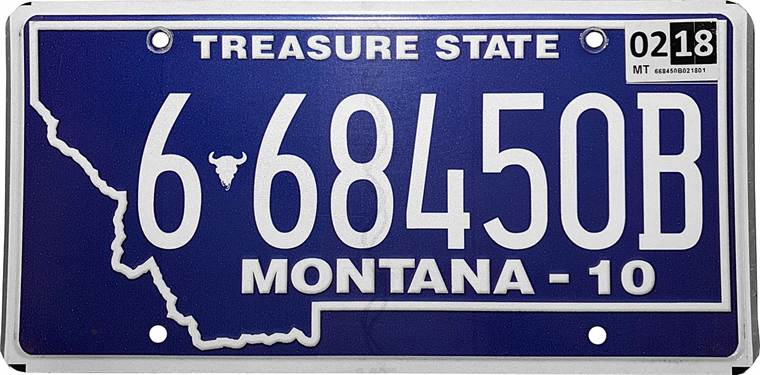
A new vehicle opens a fresh record. The county issues the first plate under the fee table, and the $12 plate fee applies. The buyer then renews each year at the age line, and the rate falls as the vehicle ages. A truck bought new at $217 a year drops to $87 at year five and to $28 at year eleven. A used vehicle moves through a transfer. The seller removes the plate at the sale under Section 61-3-334, and the buyer titles and registers the vehicle in the buyer’s name. The buyer pays the age line for the vehicle and takes a plate with the buyer’s county code. The Montana license plate transfer page walks both sides of that paperwork. A buyer should match the plate, the title and the vehicle identification number on the frame before the money changes hands. A mismatch is a reason to pause the deal, and the Montana plate lookup walkthrough shows the steps from tag to record.
Vehicle Classes and Special Cases
A motorcycle carries one rear plate and pays a one-time fee of $53.25 plus a $16 safety fee. The Montana motorcycle plates page covers the endorsement and the single-plate rule. A rider who wants the off-road route too pays $114.50 one time for both uses. A trailer carries one rear plate, and the fee follows the declared weight or the length. A unit under 6,000 pounds pays $61.25 once, and a travel trailer under 16 feet pays $72 once. The Montana trailer registration page sets out both tables. A company can hold the title and the plate for a vehicle through a Montana limited liability company. The Montana LLC vehicle registration page covers the company route, the agent and the exact fees. A long-held vehicle may take the permanent route and skip the renewal, which the Montana permanent license plates page covers.
Renewal and the Yearly Cycle
A light vehicle renews each year on the anniversary month, and the county mails a notice ahead of the date. The notice lists each line, from the base rate to the county tax. A driver pays at the counter or through the state online service, and the record updates at the payment. A motorcycle, a trailer and a boat often sit on a one-time route and skip the yearly cycle. A driver who holds a permanent registration skips it as well, and the tag carries a PERM tab rather than a year tab. The Montana license plate renewal page covers the dates and the notices. A driver who lets a registration lapse faces a penalty that grows over time, and a long lapse can push the owner to register from the start. A driver who parks a vehicle for a season should tell the county rather than let the plate run out in silence. A renewal that lands on time keeps the record clean and the plate valid. A driver who pays through the state online service can print a receipt the same day, and the county updates the file within a short window. A driver who pays at the counter leaves with the tab or the decal in hand, and the plate stays on the vehicle through the next term. A driver who sells a vehicle before the renewal date should tell the county that the plate came off, since the notice that follows ties to a record that no longer fits the vehicle. A quick note to the office closes the local line and stops a notice that points to a machine the driver no longer holds.
The County Offices
The county sets the local lines, and the county code on the plate names the office that holds the record. A driver who moves inside the state keeps the plate through the term, and the new county picks up the local lines at the next renewal. The Montana county code list names each office and its number. A county option tax and a personal property tax vary from one office to the next, and a rural county can run a different figure than a city county for the same vehicle. A driver who wants to compare can call a few offices before the visit. The state side stays the same in every county. A driver who files in a county where the vehicle is kept keeps the record in one place, and a move to another county updates the file. The plate does not change, since the county code rides with the serial rather than the address. The county treasurer confirms the local lines when the vehicle moves.
Personalized and Specialty Plates
A driver who wants a personal combo adds $25 at the start or transfer and $10 at each renewal, on top of the registration. The Montana personalized license plates page covers the character rules and the application steps. A cause design carries a yearly donation that supports a named program, and the figure sits on the registration line. The Montana specialty license plates page lists the designs and the charges. A driver who loses or damages a tag takes the replacement path, which the Montana replacement license plates page sets out. A driver who needs a vehicle on the road before the title work closes can take a temporary registration permit for 40 days. The Montana temporary license plates page covers the fee and the placement rule.
Out-of-State Vehicles and New Residents
A driver who moves to Montana registers the vehicle at the county treasurer’s office within a short window after the move. Bring the out-of-state title, proof of the Montana address and proof of insurance. The county may ask for a vehicle identification number inspection, and the office sets the class and the age line for the vehicle. A new resident pays the Montana rate rather than the home-state rate, and the figure usually drops. A vehicle eleven years or older lands at $28 a year, which is far below the rate in many states. The county issues a Montana plate, and the county code names the office that holds the new record. A driver who keeps a home in another state and a vehicle in Montana should check the rules of both states. A vehicle that sits in Montana most of the year registers here, and one that lives in the other state stays on that state’s plate. The county treasurer can settle the question at the counter.
Insurance and the Registration Record
Montana checks insurance through the registration record, and a lapse can block a renewal or a new registration. The county asks for proof of coverage when the title and registration close, and the state verifies the policy against the plate. A driver who drops coverage can see the registration pulled until the policy is current. A policy that names the vehicle is the clean path, since the plate ties to the machine. A driver who adds a car to an existing policy should give the agent the vehicle identification number. A gap between the purchase and the policy can leave the vehicle uninsured on the first drive. A driver who moves to another insurer should update the record with the county, and the county can note the new policy. A renewal that arrives with an insurance question should be settled before the payment, since the county holds the tabs until the record clears.
Buying and Selling: Which Owner Files
The seller and the buyer each file their own step. The seller signs the title over and removes the plate at the sale under Section 61-3-334. The buyer titles and registers the vehicle in the buyer’s name, pays the age line and takes a plate with the buyer’s county code. A seller who holds a plate can move it to another vehicle the same owner holds under Section 61-3-335, and the retention fee runs $10. A driver who sells the only vehicle keeps the plate on file or returns it to the county. A dealer that takes a trade handles the plates with the paperwork. A buyer who takes a vehicle from a private seller should match the title to the vehicle identification number on the frame. A clean title with no open lien is the goal, and the county treasurer confirms the record before the money changes hands. A lien that still shows on the title holds the transfer until the lender signs the release.
Frequently Asked Questions
These five questions come up most often around Montana vehicle registration. Each answer stays short so the point lands fast.
How much does it cost to register a car in Montana?
A light vehicle pays $217, $87 or $28 a year by age, plus a $9 parks fee and a $10 state charge. A new plate set adds $12, and the county option tax and vehicle tax arrive on top.
What documents do I need to register a vehicle?
Bring the signed title or the manufacturer’s statement of origin, a photo ID, proof of insurance and proof of the Montana address. A vehicle from another state needs its out-of-state title.
Where do I register a vehicle in Montana?
At the county treasurer’s office for the county where the vehicle is kept. A dealer may handle the paperwork at the lot, and the county issues the plate under its own code.
Do I need a front plate in Montana?
Most vehicles carry a plate on the front and the rear. A motorcycle, a trailer and some other classes carry a single rear plate. The front plate laws page lists the classes that take one tag.
How often does a Montana registration renew?
A light vehicle renews each year on its anniversary month. A motorcycle, a trailer and a boat often sit on a one-time route, and a permanent registration skips the yearly cycle in full.