
Montana permanent license plates end the yearly renewal cycle. A light vehicle eleven years old or older may be permanently registered on payment of a one-time fee of $87.50 under Section 61-3-562, and a motor home of the same age takes the permanent route for $237.50. The county treasurer then issues a tab printed PERM, and the owner keeps the same plate without a renewal notice.
Montana permanent registration suits a long-held truck, a farm car or a collector piece that stays with one owner. This page sets out the age rule, the exact one-time fee, the extra lines that ride with it, the plate series the state will not put on the permanent route, and what happens to the registration when the vehicle is sold.
What Permanent Registration Does
Permanent registration replaces the annual cycle. The owner pays the one-time charge and stops renewing, and the county treasurer issues a tab printed PERM instead of a year tab. The plate stays the same, the serial stays the same, and the record sits in the county books until the vehicle changes hands. The law treats the permanent fee as a full settlement. Once a vehicle is permanently registered, the owner owes no further fee under Section 61-3-561, and no other motor vehicle registration fee set out in Section 61-3-562 applies for as long as the owner holds it. The registration does not lapse, so there is no late charge and no tab to change each year. The route suits an owner who plans to keep the vehicle. A driver who expects to sell within a year or two rarely gains from the larger up-front payment, since the permanent registration does not pass to a new owner. A driver who keeps a truck for a decade gains the most, and the paperwork at the county office finishes in one visit.
- Age — the vehicle must be eleven years old or older.
- Fee — $87.50 for a light vehicle, $237.50 for a motor home.
- Tab — the county issues a tab printed PERM.
- Renewal — none, for as long as the same owner holds the vehicle.
https://mvdmt.gov/license-plate-information/Who Qualifies for the Permanent Route
The age test does the work. A light vehicle eleven years old or older qualifies, and a motor home of the same age follows its own permanent line. The year printed on the title sets the figure, and the county treasurer counts from the model year rather than the purchase date. A light vehicle covers a car, a pickup of one ton or less and a similar passenger machine. A truck rated above one ton follows a different table, and a trailer follows the trailer lines. The county office can confirm the class before the owner pays, and the classification decides which fee applies. A vehicle with a lien still needs the lender’s release before the record closes, since the permanent route ends the renewal that the lender watches. A driver who still owes money on a truck should settle with the lender first. The county treasurer confirms the title is clean before filing the permanent record. A vehicle parked for a full season still qualifies on its age, and the county counts the model year rather than the miles on the odometer. A farm truck that works a few months a year sits on the same rule as a daily driver, and a classic kept in a garage takes the route on the same test. The age line is the only test the statute sets for a light vehicle.
The Exact One-Time Cost
The figures are set in law. A light vehicle pays an $87.50 registration fee for permanent registration under Section 61-3-562, and a motor home pays a one-time registration fee of $237.50. Both figures replace the yearly rate, which runs $28 a year for a light vehicle eleven years or older. A light vehicle on the permanent route collects the other lines as well. The state adds a $10 Montana Highway Patrol Salary and Retention fee, a $2 general fund charge, the state registration charge and the county lines that apply to the vehicle. The county option tax is collected five times over, since the permanent fee settles five years of that charge at once.
| Permanent line | Figure |
|---|---|
| Light vehicle, 11 years or older | $87.50 one time |
| Motor home, 11 years or older | $237.50 one time |
| Highway Patrol Salary and Retention fee | $10 |
| General fund charge | $2 |
| County option motor vehicle tax | Collected five times |
| Annual rate the route replaces, light vehicle | $28 a year |
The payback is quick. A light vehicle that would renew at $28 a year recovers the $87.50 in a little over three years, and a truck held for ten years saves the whole yearly figure. A driver who wants a clean total should ask the county treasurer to quote the local lines before signing the paperwork.
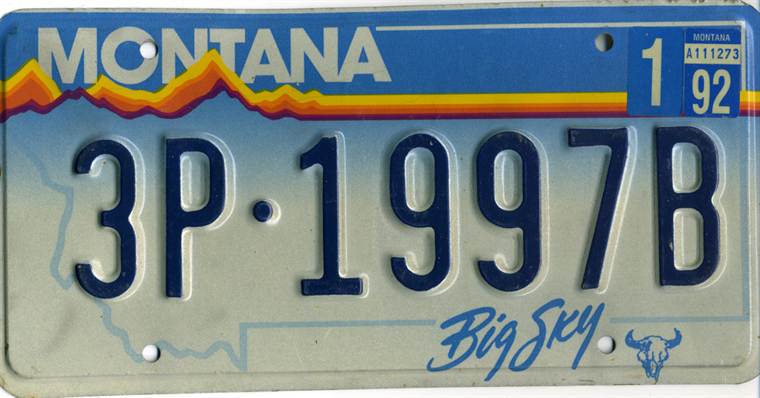
Plate Series You Cannot Use Permanently
The state bars six plate series from permanent registration. A driver who holds one of these designs keeps the yearly renewal instead of the one-time fee, and the county will not file the permanent record. The bar covers designs tied to a group or a benefit rather than a plain tag.
- National Guard plates — the series under Section 61-3-458(2)(b).
- Reserve Armed Forces plates — the series under Section 61-3-458(2)(c).
- Wheelchair and disability plates — the design carrying the wheelchair symbol.
- Amateur radio plates — the operator series under Section 61-3-422.
- Collegiate plates — the university series under Section 61-3-465.
- Generic specialty plates — the open design series under Section 61-3-479.
A cause design or a sports plate that sits outside those six sections may take the permanent route, and the donation tied to the design rides with the one-time fee. The Montana license plate types page lists each family and the rules that attach to it. An amateur radio plate stays on the annual cycle, since the FCC call sign on the face must be checked each term. A collegiate plate follows the university program, which the state renews yearly. A driver who wants one of these designs simply renews each year as usual.
Personalized Plates on the Permanent Route
A personal combo may sit on a permanently registered vehicle, and the state collects five times the personalized renewal fee at the time of the permanent filing. That charge settles the personal fee across the same span as the county option tax, and the owner keeps the combo without a further personal charge. A specialty design with a donation collects five times the plate fee for the same reason. The Montana registration fee breakdown lists the standard personal charge at $25 at start or transfer and $10 at renewal, so five years of renewal sit in the permanent total. A driver who drops the personal combo before filing pays the plain permanent lines only. A driver who keeps the combo should ask the county to quote five times the personal fee, since that figure sits on top of the $87.50. The Montana personalized license plates page covers the personal fee in full.
The PERM Tab
The tab tells the story. A permanently registered vehicle carries a tab printed PERM rather than a year, and that tab covers the model year rather than a date. An officer who reads the tab sees a vehicle that has settled its registration, and no year tab is due. The tab sits where a year tab would go, at the corner of the plate, and the county issues it with the record. A driver who loses the tab replaces it at the county office. The plate itself stays through the route, so the county code and the serial never change. A driver who moves to another county keeps the permanent record, and the new county sees the same PERM status. The Montana license plate renewal page covers the notices a permanently registered vehicle stops receiving.
Selling a Permanently Registered Vehicle
The permanent registration does not pass to the next owner. When a permanently registered vehicle is sold or transferred, the state cancels the permanent registration, and the new owner must file a title application and a registration application under the standard rules. The county treasurer closes the old record at the transfer. The seller should tell the buyer that the PERM status ends with the sale, since a buyer may expect to keep it. The buyer then registers at the age line for the vehicle, which runs $28 a year for a light vehicle eleven years or older, and can file for permanent registration again after the transfer closes. The Montana license plate transfer page walks the paperwork both owners file at that point. A trade-in follows the same path, and the dealer closes the record at the transfer. Keep the PERM tab and the title with the paperwork, since a missing tab slows the transfer. The county treasurer confirms the record is clean before the money changes hands.
The Break-Even Point
The base figure makes the arithmetic easy. A light vehicle that renews at $28 a year recovers the $87.50 permanent fee in a little over three years, and every year after that costs nothing on the registration line. A truck held for a decade saves seven years of the base rate. The county option tax changes the shape of the calculation. That charge is collected five times at the permanent filing, so the owner pays five years of county tax on the day the record is made. The saving against the base rate starts after three years, and the owner reaches a clear gain once the vehicle stays past the fifth year. A driver who expects to keep the vehicle a short time should stay on the yearly route. A driver who knows the truck will sit on the property for a decade gains the most from the one-time filing. Ask the county treasurer to quote both totals for the specific vehicle before the owner chooses.
What Happens After the Filing
The county closes the annual record and opens the permanent one. The owner receives the PERM tab, and the plate stays on the vehicle with its original serial. The notice that used to arrive each year stops coming, since the registration no longer runs on a date. The insurance requirement does not change with the registration. A permanently registered vehicle still needs a current policy, and a lapse can still draw a question from the county. The insurance verification fee is collected at the filing where the vehicle class asks for it, and the cover stays in force through the life of the record. Property tax on the vehicle continues under the county rules, since the permanent registration settles the motor vehicle registration line rather than the county levy. A driver who moves to another county keeps the permanent status, and the new county picks up the levy side of the record.
Trucks, Motor Homes and Other Classes
A truck rated at one ton or less takes the light vehicle permanent route, and the statute adds a second line for that class. The owner pays five times the fees set out in Section 61-10-201 alongside the $87.50, so the total sits above a plain passenger car. The county treasurer quotes the exact figure for the rating on the title. A motor home eleven years or older takes its own permanent line at $237.50 one time, and the total carries five times the personalized renewal fee if the plate holds a personal combo, any specialty donation tied to the design, and the $5 insurance verification fee. A coach held long term still recovers the figure against the $97.50 annual rate at eight years and older. A trailer, a snowmobile, a motorcycle and a collector vehicle follow their own classes, and each one already carries a one-time figure in most cases. A collector piece held and operated solely as a collector’s item pays $10 once at 2,850 pounds or over and $5 below that mark, which settles the registration from the start. The county treasurer names the class for a machine that sits between two lines.
Keeping the Record Straight
A driver who loses the PERM tab replaces it at the county office, and the plate itself carries through. A plate that is damaged or stolen is replaced at the county office for the plate fee, and the permanent status follows the vehicle record rather than the metal. The renewal page covers that replacement path. A change of address updates the record without touching the permanent status, since the registration sits with the vehicle rather than a mail date. A driver who changes insurers tells the agent that the vehicle is permanently registered, since the renewal schedule the insurer expects no longer applies. A driver who moves a vehicle out of state should settle the Montana record first, since a permanent registration here does not cover another state’s rules. The class list shows which vehicles carry a single plate, and the county office can confirm what a specific vehicle holds.
Frequently Asked Questions
These five questions come up most often around Montana permanent registration. Each answer stays short so the point lands fast.
What age vehicle can take a permanent plate?
Eleven years old or older. The model year on the title sets the figure, and the county treasurer counts from that year rather than the purchase date.
How much is permanent registration in Montana?
A light vehicle pays $87.50 one time, and a motor home pays $237.50. The total carries the $10 Highway Patrol fee, the $2 general fund charge and five times the county option tax too.
Do I ever need to renew a permanently registered vehicle?
No, for as long as you keep it. The county issues a tab printed PERM and sends no renewal notice for as long as the same owner holds the vehicle.
Can I sell a vehicle with permanent registration?
Yes, though the status ends at the sale. The state cancels the permanent registration on transfer, and the new owner titles and registers the vehicle fresh.
Which plates cannot be permanently registered?
National Guard, Reserve Armed Forces, wheelchair and disability, amateur radio, collegiate and generic specialty plates. Those six series stay on the yearly renewal.