
Montana license plate law requires two plates on most passenger vehicles, one at the front and one at the rear. Motorcycles and trailers carry a single rear plate. The rule covers cars, light trucks, vans and sport utility vehicles, and a missing, covered or bent plate can draw a fine.
Montana license plate law on the front plate trips up new residents who arrive from a one-plate state. This page states the rule in plain terms, lists the exemptions, sets out the fine, and covers the covers and frames that turn a clean plate into a citation. Read it before you mount a plate or swap a bracket.
Does Montana Require a Front Plate
The answer is yes for most passenger vehicles. Montana issues two plates for a car, a light truck, a van and a sport utility vehicle, and the owner mounts one at the front and one at the rear. The state prints the same serial on both, so the pair matches the record. The rule reaches back through the decades. Montana has issued pairs for passenger vehicles for most of its history, and the current design carries the same pairing. A driver who moves from a one-plate state should plan for a front bracket on the new vehicle. A dealer that sells a vehicle in Montana sends the buyer out with a matching pair. A private sale keeps the plates with the seller in most cases, so the buyer registers the vehicle and receives a fresh pair. Either way the front plate arrives with the rear one.
- Passenger cars — two plates, front and rear.
- Light trucks and vans — two plates.
- Sport utility vehicles — two plates.
- Motorcycles — one rear plate only.
- Trailers and snowmobiles — one rear plate or a decal.
https://mvdmt.gov/license-plate-information/Why Montana Uses Two Plates
A front plate helps an officer read a vehicle from either side. A patrol car that approaches from the front can confirm the tag without a turn, and a camera at a toll or a gate can read the number on the way in. The pair helps a witness report a vehicle after an incident too. The pair carries the same serial and the same county code, so the two plates match the one record. A driver cannot mix a front plate from one vehicle with a rear plate from another, since the serial would not line up. That match is what makes the pair useful. A few states issue a single rear plate, and a driver from one of those states may find the front bracket odd at first. Montana keeps the pair since the record links the two, and the state has done so for decades. The rule applies to a new resident from the first day of registration.
Motorcycles, Trailers and Single-Plate Classes
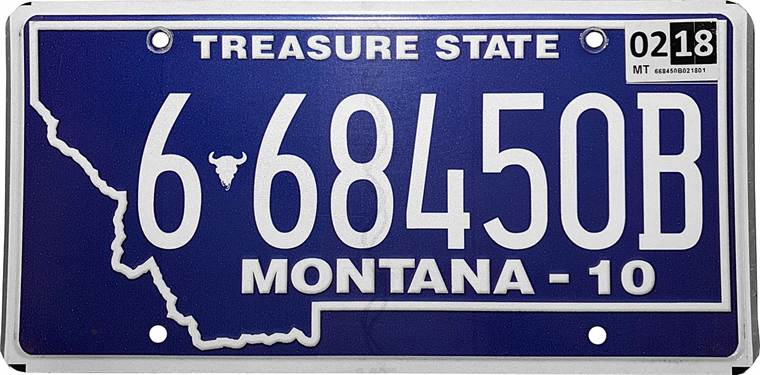
A motorcycle carries one plate at the rear. The state does not issue a front plate for a two-wheel vehicle, and the small face fits the rear bracket on the fender. A rider who adds a decorative front tag does so without a state plate on the front. A trailer, a semitrailer and a snowmobile follow the same single-plate pattern. Each takes one rear plate, and a less familiar class may take a decal in place of a plate. The decal carries a unique serial that ties to the vehicle and the owner on file. A motorcycle plate uses the county code on the older runs, so a rider can still read the county from the tag. A trailer plate follows the same rule. The Montana license plate types page lists each class and the number of plates it takes.
Exemptions and Special Cases
A few cases fall outside the two-plate rule. A vehicle registered as an antique carries its own pair in most cases, and a collector vehicle on a permanent plate follows the same pattern. A low-speed electric vehicle or a golf cart may carry a decal rather than a pair of plates. A government vehicle and a vehicle owned by a state, county or city office can fall outside the standard registration group. A farm truck may run a farm class plate, which still comes as a pair for a passenger-style vehicle. The county treasurer confirms the class for a specific truck. A motorcycle with a sidecar still takes a single rear plate, since the class follows the machine rather than the added wheel. A trailer that carries a boat follows the trailer class rather than the boat class. Each class keeps its own plate count.
The Fine for a Missing or Covered Plate
A missing front plate can draw a fine, and a covered or obscured plate can draw one as well. An officer who cannot read a tag has grounds for a stop, and the citation follows the stop. The amount sits with the court schedule, and the figure shifts with the county. A bent or damaged plate falls in the same group. A plate that folds back at the corner hides the serial, and the state asks the owner to replace it rather than straighten it. A replacement set carries a $10 fee, or $15 to keep the same serial in most cases. A lost plate should be reported and replaced at the county office. A driver who waits can face a stop for a missing tag, and a stolen plate on the road in the wrong hands can cause a larger problem. Report a theft to the police and to the county.
- Missing front plate — a stop and a possible citation.
- Covered or tinted plate — a stop and a possible citation.
- Bent or damaged plate — replace it rather than straighten it.
- Lost or stolen plate — report it and replace it at the county office.
Covers, Frames and Brackets
A tinted cover hides the plate from a camera and an officer, and Montana treats a hidden plate as a violation. Skip the smoked plastic and the reflective film. A clear cover that fogs over the years can hide a character just as well, so replace it once it dulls. A frame can hide the county code or the state name if it sits too wide. A frame that blocks the serial or the decal gives an officer a reason to stop the vehicle. Pick a slim frame that leaves the whole face clear, and check the corners after you mount it. Mount the plate flat and keep the bolts tight. A plate that rattles or hangs at an angle can draw a question, and a bracket that rusts through can drop the plate on the road. A front bracket that fits the vehicle model costs little and holds the plate square.
New Residents and the Front Plate
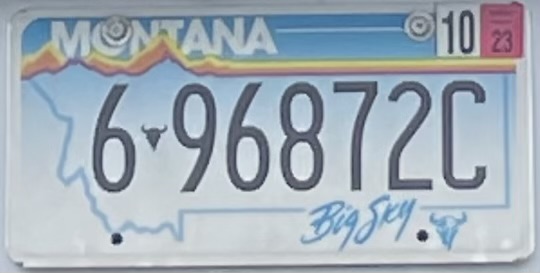
A new resident registers within 60 days of the move and swaps the out-of-state plates for a Montana pair. The front bracket from the old state may not fit the new plate, so check the bolt pattern before the visit. Montana uses the mounting pattern shared across the country since 1956, so most brackets work. A driver who keeps an out-of-state plate past the window can face a penalty on top of the standard bill. The county treasurer confirms the current window and the papers to bring. The Montana county code list shows which office handles the new registration. A vehicle that arrives from a one-plate state may carry no front bracket at all. A dealer or a parts shop can supply one for the model, and the cost runs low. Fit it before the plates arrive so the pair goes on in one step.
Replacing or Transferring a Plate
A plate that wears out or fades is replaced at the county office. The state reprints the serial and issues a fresh pair, and the owner returns the old metal in some cases. The $12 plate fee applies when a new set is issued. A driver who moves a plate to a new vehicle completes a transfer through the county treasurer. The plate keeps its serial and its county code, and the pairs move together. A transfer skips the $12 plate fee when the plates carry over. A personalized or sponsored design renews with the vehicle, and the pair matches the design on both faces. The Montana registration fee breakdown lists the plate charge and the personal add-on, and the Montana license plate numbers page shows how the serial reads on each face of the pair.
How the Rule Applies to a New Vehicle
A new vehicle bought from a dealer leaves the lot with a front bracket from the factory or a dealer install. A private sale keeps the plates with the seller in most cases, so the buyer registers the vehicle and receives a fresh pair. Fit the front bracket before the plates arrive so the pair goes on in one trip. A vehicle from a one-plate state may carry no front bracket at all. A parts shop or a dealer can supply one for the model, and the cost runs low. Check the bolt pattern against the plate before you buy, since the country has shared one pattern since 1956. A truck with a heavy front bumper may need a bracket that bolts to the bumper rather than the frame. A farm truck and a work truck often use that route. A driver who builds the bracket at home should keep the plate flat and the corners clear.
Plate Placement on Specialty Designs
A sponsored design still comes as a pair for a passenger vehicle, so both faces carry the artwork. The county code and the serial sit on both plates, and the personal combo applies to the pair. A driver who mounts one face from an older set breaks the match. A motorcycle keeps a single rear plate on every design, and a trailer does the same. A snowmobile and a utility vehicle follow that pattern, and a less familiar class may take a decal in place of a plate. The class sets the count rather than the artwork. A personalized design renews with the vehicle, and the pair matches on both ends. The state lists each family on its own page, and the personal charge applies the same way on a pair as on a single tag.
What Happens at a Traffic Stop
An officer who cannot read a plate has grounds for a stop. A missing front plate, a smoky cover or a frame that hides the serial all fall in that group. The stop can lead to a citation, and the fix is the same in each case: clear the plate and keep it readable. A driver should keep the registration card in the vehicle and the address current at the county office. A card that names an old address can raise a question, and a quick update at the county saves the trouble. The county code printed on the tag names the office that holds the record. A citation for a plate issue usually asks the owner to correct the problem and show proof. A replacement plate or a removed cover settles the matter, and the county can issue a receipt for the fix. Keep the proof with the citation until the case closes.
Plate Mounting Tips
A plate that sits flat reads best at any angle. Use the factory holes when they exist, and add a bracket when the model has none. A bolt that is too long can poke through and scratch the bumper, so trim it or pick a shorter one. Check the corners after you mount the plate. A frame that covers a corner hides the decal, and a bolt that sits proud of the face can catch on a car wash brush. A quick turn with a screwdriver settles both issues. Keep the plate clean through the winter. Road salt and mud can dull the reflective sheeting, and a plate that stays coated for months grows hard to read. A rinse at a car wash restores the face in seconds and keeps the tag clear through the season. A driver who parks outside can expect sun fade on the face over the years. When the plate turns dull or the serial grows soft, replace the set at the county office. The state lists the plate charge with the other fees, and a replacement keeps the same serial in most cases. A driver who keeps the plates clean, flat and clear of covers rarely sees a plate citation. The rule is simple to meet, and a quick check each month catches a loose bolt or a dulled face before it turns into a stop. An officer at a routine stop reads the plate against the registration card in the vehicle, and both current keep the stop short. Montana has issued pairs for passenger vehicles for most of its history, and the state reissues the metal on a fixed cycle rather than at the owner’s request. That cycle shows why a plate can change design and still keep the serial and the county code the same. A driver who holds the same vehicle for years meets a few fresh faces along the way, each one a matching pair.
Frequently Asked Questions
These five questions come up most often about the Montana front plate. Each answer stays short so the point lands fast.
Does Montana require a front license plate?
Yes, for most passenger vehicles. A car, a light truck, a van and a sport utility vehicle take two plates, one at the front and one at the rear. Motorcycles and trailers take one rear plate.
Is it illegal to drive without a front plate in Montana?
A missing front plate can draw a stop and a fine. A covered or bent plate can draw the same, since an officer cannot read the tag. Replace a damaged plate at the county office.
Can I use a license plate cover in Montana?
A tinted or smoky cover hides the plate and can draw a violation. Skip the cover entirely, or use a clear one that stays clean and leaves the whole face readable.
Do motorcycles need a front plate in Montana?
No. A motorcycle carries a single rear plate. A trailer, a semitrailer and a snowmobile follow the same single-plate pattern, and a less familiar class may take a decal instead.
What should I do if my front plate is lost?
Report the loss to the county treasurer and replace the set. A replacement carries a $10 fee, or $15 to keep the same serial in most cases. Report a theft to the police as well.