
Montana county numbers run from 1 to 56, one code for each county, and the digits sit at the left edge of every standard plate. Match the code and you name the county that issued the tag. This page carries the full list in one table, pairs each code with its county seat, and shows how to read the number on a plate from any decade.
Montana county license plate numbers look random until you line them up in order. The list starts at Silver Bow in Butte and ends at Lincoln in Libby, and the order follows the population count from the 1930 census. Read the table once and the pattern holds for every standard plate the state has printed since 1934, across every design change along the way.
How the Montana County Code Works
Each standard plate opens with a county code, then a separator, then a serial. The code names the county, and the serial belongs to that county alone. A plate that starts with 3 comes from Yellowstone County, and a plate that starts with 46 comes from Granite County. The system dates to 1934. That year the state ranked its counties by population and assigned the numbers from the top down. Silver Bow County held the largest count at the time and took code 1. Lincoln County sat at the other end and took code 56. The state never re-ranked the list, so the numbers still reflect a snapshot from the early 1930s.
How to Use This List
Read the plate from the left edge and take the first one or two digits. Look those digits up in the table below and read the county name and the county seat. That single step settles the county for a plate from any year. A plate that opens with a letter rather than a digit belongs to the optional, personalized or Centennial replica family, and no county code applies. Move to the Montana license plate numbers page for the full decode, including the letter-first serials from the 1991 run.
- Code 1 — Silver Bow County, seat at Butte.
- Code 3 — Yellowstone County, seat at Billings.
- Code 6 — Gallatin County, seat at Bozeman.
- Code 46 — Granite County, seat at Philipsburg.
- Code 56 — Lincoln County, seat at Libby.
https://mvdmt.gov/license-plate-information/Full Montana County Code List
All 56 codes sit below, in order, with the county and the county seat for each one. The list covers every county in the state.
| Code | County | County seat |
|---|---|---|
| 1 | Silver Bow | Butte |
| 2 | Cascade | Great Falls |
| 3 | Yellowstone | Billings |
| 4 | Missoula | Missoula |
| 5 | Lewis and Clark | Helena |
| 6 | Gallatin | Bozeman |
| 7 | Flathead | Kalispell |
| 8 | Fergus | Lewistown |
| 9 | Powder River | Broadus |
| 10 | Carbon | Red Lodge |
| 11 | Phillips | Malta |
| 12 | Hill | Havre |
| 13 | Ravalli | Hamilton |
| 14 | Custer | Miles City |
| 15 | Lake | Polson |
| 16 | Dawson | Glendive |
| 17 | Roosevelt | Wolf Point |
| 18 | Beaverhead | Dillon |
| 19 | Chouteau | Fort Benton |
| 20 | Valley | Glasgow |
| 21 | Toole | Shelby |
| 22 | Big Horn | Hardin |
| 23 | Musselshell | Roundup |
| 24 | Blaine | Chinook |
| 25 | Madison | Virginia City |
| 26 | Pondera | Conrad |
| 27 | Richland | Sidney |
| 28 | Powell | Deer Lodge |
| 29 | Rosebud | Forsyth |
| 30 | Deer Lodge | Anaconda |
| 31 | Teton | Choteau |
| 32 | Stillwater | Columbus |
| 33 | Treasure | Hysham |
| 34 | Sheridan | Plentywood |
| 35 | Sanders | Thompson Falls |
| 36 | Judith Basin | Stanford |
| 37 | Daniels | Scobey |
| 38 | Glacier | Cut Bank |
| 39 | Fallon | Baker |
| 40 | Sweet Grass | Big Timber |
| 41 | McCone | Circle |
| 42 | Carter | Ekalaka |
| 43 | Broadwater | Townsend |
| 44 | Wheatland | Harlowton |
| 45 | Prairie | Terry |
| 46 | Granite | Philipsburg |
| 47 | Meagher | White Sulphur Springs |
| 48 | Liberty | Chester |
| 49 | Park | Livingston |
| 50 | Garfield | Jordan |
| 51 | Jefferson | Boulder |
| 52 | Wibaux | Wibaux |
| 53 | Golden Valley | Ryegate |
| 54 | Mineral | Superior |
| 55 | Petroleum | Winnett |
| 56 | Lincoln | Libby |
Codes on Trailer, Motorcycle and Truck Plates
A trailer plate carries a county code at the left edge, just like a passenger plate. The face is narrower, so the serial runs shorter. A utility trailer and a travel trailer from the same county share the code and still carry their own serials. A motorcycle plate follows the same rule. The county code stays in front, and the serial fills the small face. A rider who moves to a new county gets a new code on the next plate, even when the bike stays the same. A commercial or apportioned plate bends the rule. The tag shows a base and a fleet number rather than a plain county serial, since the owner reports miles across several states. A driver who reads one of these tags finds a fleet code in place of the usual county block.
County Codes and New Residents
A new resident hands over the out-of-state title and plates and picks a Montana design at the county office. The plate then carries the code for the county where the vehicle is kept, not the county the driver left behind. That step matters for the fee. The county office sets the local option charge, so a move across the state can shift the yearly total even when the vehicle class stays the same. The code on the new plate marks the office that set the number. New residents have 60 days from the move to complete the swap. A driver who waits past the window can face a late charge, so book the county office early and bring the title, the photo ID and proof of Montana residence.
What the Code Cannot Tell You
The code names a county and nothing more. It does not reveal the owner, the address or the plate history. Owner names and home addresses stay private under federal law, so no public list ties a tag to a person. The code does not date a plate on its own. Two plates from the same county can come from runs decades apart, and the design tells the decade better than the number does. A collector who wants the year reads the design, not the county digit. The code does not set the fee by itself. The vehicle class and the weight drive the charge, and the county adds its local option on top. Read the code for the county, and read the vehicle record for everything else.
The Low Codes You See Most
The first ten codes cover the most crowded counties, so they show up on the road far more often than the rest. Silver Bow, Cascade, Yellowstone, Missoula, Lewis and Clark, Gallatin, Flathead, Fergus, Powder River and Carbon fill a large share of Montana traffic.
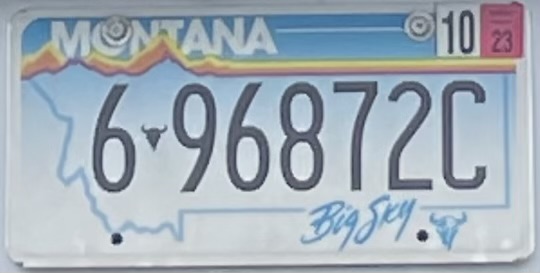
A driver who reads six codes well can place most plates on a Montana road. Gallatin County holds code 6 and covers Bozeman, and Flathead County holds code 7 and covers Kalispell. Those two counties sit in the fastest growing parts of the state, so their codes turn up on newer plates.
The High Codes and the Rural Counties
The codes past 40 belong to the wide, thinly settled counties. Granite, Meagher, Liberty, Park, Garfield, Jefferson, Wibaux, Golden Valley, Mineral, Petroleum and Lincoln close out the list. A plate with one of these codes points to a stretch of open country rather than a city block.
Petroleum County carries the smallest population in the state and holds code 55. Its seat, Winnett, sits in the middle of open grassland. A driver who spots a 55 on a plate has found one of the rarest codes on the road. The high codes cluster in the eastern plains and the mountain valleys. A driver who reads a code past 40 can picture the open country behind it, far from the crowded belt around Billings and Bozeman.
How Counties Are Organised in Montana
Montana divides into 56 counties, and each one runs its own title and registration office through an elected treasurer. The treasurer issues plates, collects the fees and keeps the local record. That setup shows why the county code matters, since the office that hands over the plate is the office that assigns the serial. A county seat holds the main office, and some counties run a second branch in a larger town. Yellowstone County covers Billings, Cascade County covers Great Falls, and Missoula County covers Missoula. A driver registers at the office for the county where the vehicle is kept, and the plate then carries that county code. The county sets a local option fee on top of the state charge too. That fee shifts with the county budget, so two drivers in the same state can pay different totals for the same vehicle class. The county code on the plate ties the vehicle to the office that set those numbers.
Reading the Code Without a Printed List
A driver who knows a few anchors can place a plate fast. Code 1 sits in the mining country around Butte. Code 3 lands in the Billings area, and code 4 lands in Missoula. From there, the number climbs as the counties grow smaller. Two anchors cover the middle of the list. Code 29 points to Rosebud County in Forsyth, and code 30 points to Deer Lodge County in Anaconda. A driver who sees a two-digit code knows the county sits past the crowded run at the front of the list. The last stretch runs through the open country. Code 50 covers Garfield County in Jordan, and code 56 closes the list with Lincoln County in Libby. A plate in that range points to a county with more land than people.
County Codes and a Plate Search
The county code gives a plate search a head start. Read the code, then check the vehicle record against the county that issued the tag. A mismatch between the plate and the paperwork signals a problem worth a second look. A buyer can pair the code with a title check before a sale. A plate from Yellowstone County points to the Billings office for the paper trail, and a plate from a rural county points to its own treasurer. The county stays on the record through a sale, since the code never follows the owner to a new county. A seller benefits from the same reading. A clean record from a county that keeps careful files can speed a deal, and a buyer who trusts the county history tends to close faster. The code turns a plate into a small piece of evidence.
Mistakes When Reading a Code
The first mistake is reading a letter as a digit. A plate that opens with a letter belongs to the optional family and carries no county code at all. Look for a digit at the left edge before you reach for the table. The second mistake is guessing a town from a county code. The code names the county, not a city. Code 3 covers all of Yellowstone County, from the Billings core to the rural edge, so the plate does not pin a driver to one address. The third mistake is reading a high code as an error. Codes in the forties and fifties belong to the small counties, and they stay valid. A 55 on a plate points to Petroleum County, one of the rarest codes on the road.
How the Numbers Follow the 1930 Census
The order came from a single count. The state tallied each county in the 1930 census and handed out the codes from the largest county down. That snapshot froze the list, and a county that grew later kept its old number. The rule left a few quirks. A county that shrank over the decades still carries a low code from its busier past. A county that boomed after 1930 still carries a high number that never matched its later size. Read the list with that history in mind and the odd gaps make sense. A driver can test the rule on any plate. Find a low code near 1 and the county sits in the old mining belt. Find a high code past 50 and the county sits in open ranch land. The number tracks the 1930 count, not the map of today.
Reading a County Code on an Old Plate
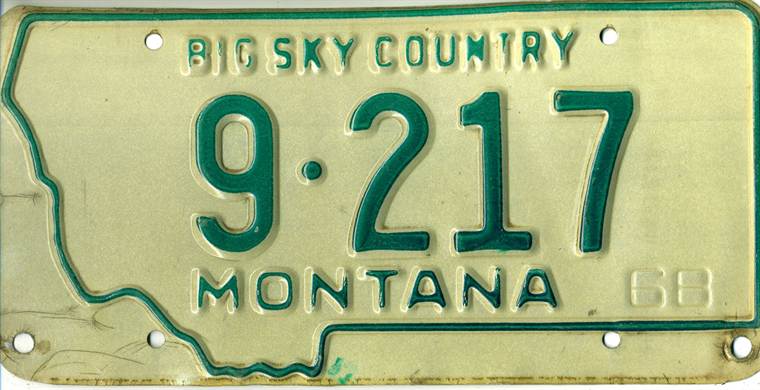
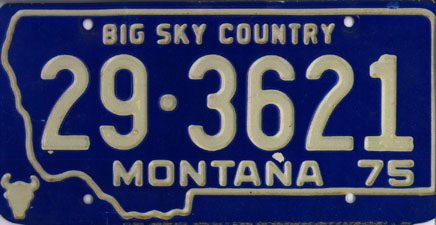
An old Montana plate uses the same code as a new one. A 1968 plate that opens with 9 points to Powder River County, and a 1975 plate that opens with 29 points to Rosebud County. The designs changed across the decades, but the county digit stayed in the same spot. A collector can decode a plate from the 1950s or the 1990s with the same table. The state has kept the list almost fixed, so the opening digits from one decade match the next. That stability makes the table useful for a plate bought at a swap meet. A worn plate still gives up its county once the digits come clear. A wire brush and a soft cloth lift the dirt without harming the sheeting, and the code sits in the same spot whether the plate came from 1968 or 2010. Read the left edge first and the year matters less than the county.
Codes That Do Not Appear on a Plate
Optional, personalized and Centennial replica plates carry no county code. Those families use an ABC123 format, so the left edge holds a letter rather than a digit. A driver who looks for a county on one of these plates finds nothing to match. A driver who wants a county code picks a standard design. The Montana license plate types page lists the families that carry a code and the ones that do not, along with the fee for each. A full plate search pairs the code with the vehicle record. The Montana plate lookup walkthrough covers the steps, and the Montana registration fee breakdown lists what the owner pays each year.
Frequently Asked Questions
These five questions come up most often when a driver reads a Montana county code. Each answer stays short so the point lands fast.
How many county codes does Montana use?
The state uses 56 codes, one for each county. The list runs from Silver Bow at code 1 to Lincoln at code 56, with no gaps in between.
Which county is code 46 on a Montana plate?
Code 46 points to Granite County, with its seat at Philipsburg. The code sits in the high range that covers the rural counties.
Why does my Montana plate have no county code?
Optional, personalized and Centennial replica plates use an ABC123 format with no county digit. Pick a standard design if you want the county code on the plate.
What is the rarest Montana county code?
Petroleum County holds code 55 and the smallest population in the state. Its county seat is Winnett, in the middle of open grassland.
Can I pick my county code on a new plate?
No. The code follows the county where the vehicle is registered, and the owner cannot choose another one. Move to a new county and the next plate carries that county code instead.