
Montana custom license plates sit with the custom vehicle and street rod class under Section 61-3-320, and the class carries a rule that most drivers miss: the state can allow a single rear plate on a custom or a street rod. The owner certifies the vehicle is not used for general transportation and pays an extra $10 fee. A custom or street rod more than 30 years old may instead register as a collector’s item.
Montana plate rules for a custom vehicle cover a street rod, a kit vehicle and a specially constructed machine, and each path sets its own papers. This page sets out the 30-year line, the single-plate option, the vintage and pioneer tags, the kit route and the fee lines a builder meets at the county office.
How to Register a Custom Vehicle in Montana
A custom vehicle or a street rod registers at the county treasurer’s office by vehicle type. The owner pays the fee under Section 61-3-321 for the type, plus any fee or fee in lieu of tax under Section 61-3-529 or Section 61-3-562, and any local option tax. The county reads the type from the title and sets the class, then issues the plate the class allows.
- Type — the vehicle registers by type, from a light vehicle to a truck.
- Fee — the Section 61-3-321 rate for the type, plus local lines.
- Plate — a standard set, or a single rear plate with the option.
- Papers — a title and proof of the build where the county asks.
https://mvdmt.gov/license-plate-information/The county reads the type rather than the body style, so a street rod built on a truck frame can register as a light vehicle or a truck depending on the rating. A builder should bring every paper from the build, since a spare form can save a second trip. The county points to the current rules when a paper is missing.
The 30-Year Line and the Collector Route
A custom vehicle or a street rod more than 30 years old may register under Section 61-3-411 as a collector’s item. That route carries a one-time fee based on weight: $10 at 2,850 pounds or over, and $5 below that mark. An antique plate pairs with the low one-time figure rather than a yearly charge. A vehicle that sits under the 30-year line registers by type on the standard table. A light vehicle pays $217, $87 or $28 a year by age, plus the fixed charges. A truck over one ton pays the flat $22.75 a year. The class sets the line rather than the custom work. An originally equipped motor vehicle more than 30 years old that does not register as a collector’s item can take the single-plate option on the same terms as a custom. The owner certifies the vehicle is not used for general transportation and pays the extra $10 fee. The Montana permanent license plates page covers the one-time route in full.
The Single-Plate Option and the $10 Fee
The single-plate option lets a custom vehicle or a street rod carry one plate on the rear exterior rather than a set. The owner must certify that the vehicle is not used for general transportation and pay an additional $10 fee, which goes to the state general fund. The plate then sits on the rear, and the front bumper stays bare. A custom vehicle or a street rod originally registered under Section 61-3-320(1)(a), or one registered before January 1, 2006, can take the option. A vehicle that carries the option may display a personalized standard plate, a military or veteran plate, a collegiate plate or a generic specialty plate where the face is available to the class. The Montana front license plate laws page sets out which classes carry one plate. A vehicle that does not carry the option takes a standard set with a plate on the front and the rear. A builder who wants the clean front look should file the certification with the registration rather than later. The county notes the option on the record at that visit.
| Line | Figure | When it applies |
|---|---|---|
| Collector’s item, 2,850 lbs or over | $10 one time | Custom or street rod over 30 years |
| Collector’s item, under 2,850 lbs | $5 one time | Custom or street rod over 30 years |
| Single-plate option | $10 | Certified not for general transportation |
| Light vehicle, 11 years or older | $28 a year | Custom registered by type |
| Heavy truck over 1 ton | $22.75 a year | Custom built on a truck rating |
| New plate set | $12 | Standard set issued |
Vintage, Pioneer and Reproduction Plates
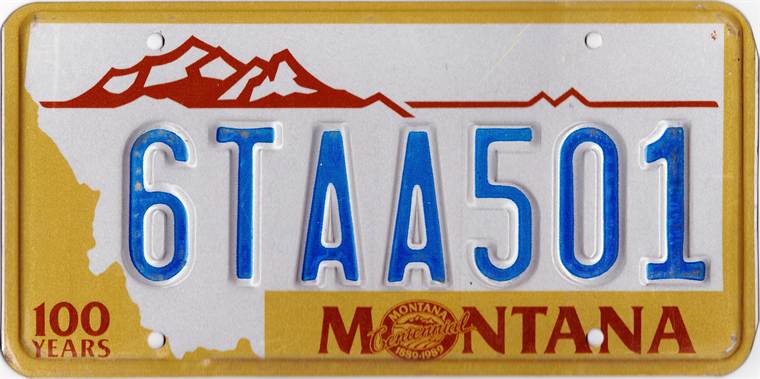
A custom vehicle or a street rod registered under Section 61-3-320(1)(a)(i) takes a set of pioneer or vintage plates under Section 61-3-411(2). The county can assign a set of original Montana plates or collector reproduction plates under Section 61-3-412 as well. The plate the county issues matches the build and the year. A reproduction plate copies a design from the year of the vehicle, and the state allows the set where the build fits the class. A driver who wants an original Montana plate for the year can hunt one through a collector and file it with the county. The office confirms the plate against the rules before it goes on the vehicle. A collector who holds a plate from the same decade can pair it with a period frame, since a frame that hides nothing stays legal. The Montana license plate history page covers the designs a builder may meet across the decades.
Kit Vehicles and Specially Constructed Vehicles
A kit vehicle pays the registration fees under Section 61-3-321, plus any local option tax or fee. On original registration, the county assigns a set of standard plates, and a specialty face applies only when the owner files for one. A kit vehicle does not take the custom single-plate option on the same terms as a street rod. A specially constructed vehicle follows the same path. The owner pays the Section 61-3-321 fees for the type, plus any fee in lieu of tax, and the county issues standard plates on original registration. A builder who wants a specialty face files the application with the registration. A kit vehicle and a specially constructed vehicle both need a title, and the county may ask for a vehicle identification number and a set of build papers. A builder should keep the receipts for the frame, the engine and the body, since the county may ask for proof of the build. The one-time or yearly line then follows the type.
Personalized and Specialty Faces on a Custom
A custom vehicle can carry a personal combo, and the county collects the $25 start charge and the $10 renewal on top of the class line. The single-plate option allows a personalized standard plate where the face is available to the class. A builder who wants a phrase on the tag files the personal application with the registration. A military, veteran, collegiate or generic specialty face can sit on a custom vehicle when the option applies and the class allows the design. The county checks the design against the class before it issues the plate. A cause design carries its donation on top of the class and personal lines. A driver who wants a personal combo on a custom vehicle should check the face length against the class. The Montana personalized license plates page covers the character rules, and the Montana license plate types page lists each family. A single rear plate keeps the custom look clean at the front.
The Papers for a Build
A custom or a kit vehicle takes more paper than a factory car. The county may ask for a bill of sale for the frame, the engine and the body, plus a statement of the build. A vehicle assembled from parts can need a vehicle identification number inspection before the record opens. A builder should keep every receipt in one file. A vehicle that carries no manufacturer’s statement of origin follows a title path of its own. The owner requests a title for the built vehicle, and the state may ask for a VIN inspection and a weight slip. The county points to the current forms, and a clear description of the build helps the record. A builder who buys a kit from a maker often receives a manufacturer’s statement of origin with the kit. That paper supports the title, and the county reads it for the year and the type. A builder who builds from scratch needs the receipts instead, and a clear file moves the record faster. A builder who wants a clean inspection should keep the frame number clear of paint and rust. An inspector reads the number against the build papers, and a number under a coat of paint can stall the file. The county points to the spot where the number sits on the type.
A Custom Truck or Van
A custom truck registers by its rating rather than its body. A truck rated one ton or less follows the light table at $217, $87 or $28 a year by age. A truck over one ton pays the flat $22.75 a year. The county reads the rating from the title or the build papers. A custom van that meets the motor home rules can register as a motor home, and the fee follows the age table from $282.50 down to $97.50. A van that stays a light vehicle follows the light line. The type sets the class rather than the artwork on the panels. A custom truck that takes the single-plate option carries one rear plate, and the same $10 fee and certification apply. A driver who wants a clean front end on a show truck should file the option with the registration. The county notes the choice on the record.
Insurance for a Custom Vehicle
A custom vehicle needs a policy that matches its value rather than a book figure. A standard policy may cover a factory car at a market rate that sits far below the cost of the build. A driver should tell the agent about the custom work and ask for an agreed-value policy. A collector who drives the vehicle a few thousand miles a year can take a collector policy with an agreed value and a mileage limit. A driver who uses the vehicle for general transportation may not qualify, and the single-plate option asks for a certification that the vehicle is not used that way. The two rules sit together. Montana checks coverage through the registration record, and a lapse can hold a renewal. The county asks for proof of coverage when the title and registration close. A gap between the build and the policy can leave the vehicle uncovered on the first drive.
Selling a Custom Vehicle
A custom vehicle sells like any other, and the seller removes the plate at the sale under Section 61-3-334. The buyer titles and registers the vehicle and sets the type for the build. A vintage or reproduction plate that came with the vehicle may pass to the buyer where the class allows, and the county notes the set on the new record. A collector car eleven years or older may take the permanent route, and the owner pays once. A custom vehicle more than 30 years old can register as a collector’s item for a one-time fee. A buyer who plans to keep the vehicle for years can compare the annual line against the one-time figure. A driver who wants a clean sale should keep the title, the build papers and the plate together. The Montana license plate transfer page covers the paperwork both owners sign. A title with an open lien needs the lender’s release before the record opens.
Frames and Displays on a Show Car
A show car can carry a period frame as long as it hides nothing, since the display rule covers the road rather than a lawn. A frame that covers a character fails the same rule at a stop as it does at a show. A slim frame that rings the plate keeps the look and the rule together. A collector who displays a plate on a wall can frame it any way at all. A plate on a vehicle answers the law, and a plate in a frame at home does not. The Montana license plate frames page covers what a frame may hide and what it may not.
Frequently Asked Questions
These five questions come up most often around a Montana custom plate. Each answer stays short so the point lands fast.
Can a Montana custom car run one rear plate?
Yes, when the owner certifies the vehicle is not used for general transportation and pays an additional $10 fee. The single plate then sits on the rear exterior, and the front stays bare.
How does a street rod register in Montana?
A street rod registers by type under Section 61-3-320, or as a collector’s item when it is more than 30 years old. The county reads the type and sets the fee line from Section 61-3-321.
What is the fee for a collector custom vehicle?
A custom or street rod more than 30 years old can register as a collector’s item for a one-time fee of $10 at 2,850 pounds or over, or $5 below that mark. An antique plate pairs with that figure.
Can a kit car get a Montana plate?
Yes. A kit vehicle pays the Section 61-3-321 fees for its type, and the county issues standard plates on original registration, with a specialty face where the owner files for one.
Can I put a vintage plate on a custom car in Montana?
Yes. A custom or street rod registered under the collector path takes a set of pioneer or vintage plates, or original Montana or collector reproduction plates where the build fits the class.