
Montana license plate renewal repeats each year on the month the vehicle was first registered. The county mails a notice ahead of the date, and the owner pays the registration charge, the county option tax and the personal property tax on the vehicle in one bill. A fresh set of tabs then lands on the plate to mark the new year.
Montana license plate renewal follows a short path that most owners finish in one sitting. This page covers the notice, the tabs and decals, the online route, the late penalty and the vehicle classes that renew on a different schedule. Follow the steps and the plate stays current without a trip to the counter.
How to Renew a Montana License Plate
A renewal runs on a yearly cycle tied to the anniversary month of the first registration. The state mails a postcard for most cars and light trucks, and the card lists the amount owed along with the deadline. Failure to receive the notice does not cancel the bill, so the record stays open on the county side. Read the notice first and check the vehicle class, the plate serial and the county code that sits on the tag. A wrong class is worth a call before you pay. Then choose a payment route: the state online service for a light vehicle, the county counter, or the mail with a check or money order. Pay the registration, the county option tax and the personal property tax in one go, and keep the receipt. The county then mails a fresh set of tabs, and the owner places them on the plate. A permanently registered vehicle skips the whole cycle and keeps its PERM tab.
- Notice — the county mails a renewal postcard ahead of the due date.
- Check — confirm the vehicle class, plate serial and county code.
- Pay — registration, county option tax and personal property tax.
- Tabs — a white month tab and a colored year tab go on the plate.
- Keep — hold the receipt until the new tabs arrive.
https://mvdmt.gov/license-plate-information/When the Renewal Falls Due
Montana assigns an anniversary month by the month the vehicle was first registered. A car that first hit the road in April renews each April, and the decal on the plate names that month. The date stays with the vehicle even when it changes hands inside the state. A new resident who registers in September keeps a September anniversary from then on. A move across a county line does not reset the month, so the cycle continues without a gap. A driver can read the white tab on the plate to find the month at a glance.
Reading the Renewal Notice
The postcard lists each charge on its own line, so a driver can see where the money goes. The registration amount, the county option tax and the personal property tax sit apart, along with the plate serial and the vehicle class. The card names the deadline and the county office that holds the record too. A notice that never arrives does not lower the bill. The county keeps the amount on file, and a driver who moved without updating the address can miss the date. Update the address at the county office as soon as it changes so the next card reaches the right mailbox. A driver who wants a firmer figure can call the county treasurer and ask for the total. The office can read the county lines, which shift with the local budget, in seconds. That call saves a second trip if the notice went astray.
Tabs and Decals on the Plate
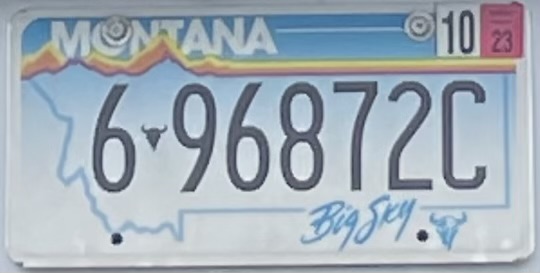
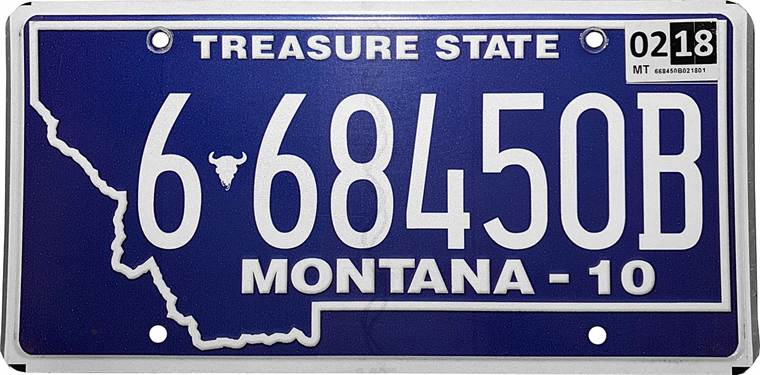
Montana marks a current registration with tabs rather than a fresh plate. A permanently registered vehicle gets one tab printed PERM. Every other vehicle carries two: a white tab for the month and a colored tab for the year. The tabs sit on the plate itself, and the county mails a fresh set once the payment clears. Scrape the old sticker off before you set the new one, since two layers can hide the month and draw a question during a stop. A torn or lost tab is replaced at the county office for a small charge. A decal takes the place of a tab on the less familiar vehicle types. Each decal carries a serial tied to the vehicle and the owner on file, and the placement shifts with the vehicle class. Keep the plate and the tabs clear of dirt and covers, since a hidden tab can draw a fine.
- Permanent registration — one tab printed PERM, no yearly cycle.
- Standard vehicles — a white month tab and a colored year tab.
- Rarer classes — a decal with a unique serial in place of a tab.
- Lost or torn tab — replaced at the county office for a small charge.
Renewing Online or at the Counter
The state online service handles a light vehicle renewal without a trip to the office. A driver enters the plate number and the last four digits of the vehicle identification number, reviews the bill and pays by card. The county lines still apply behind the screen, since the county sets the option tax and the vehicle tax. A counter visit suits a driver who wants to pay in cash, ask a question or renew a vehicle that falls outside the online group. Bring the renewal notice, the plate number and proof of insurance. A heavy truck, a motor home and an apportioned fleet vehicle often need the counter route. The mail route works for a driver who prefers a check. Send the notice with the payment and keep a copy of the check. The county mails the tabs once the funds clear, and a check that arrives late can push the renewal past the date.
Late Renewal and Reinstatement
A late renewal adds a penalty on top of the standard bill, and the amount grows the longer the plate stays expired. Pay before the month on the notice runs out to skip the charge. A short lapse is easy to fix, and the county updates the record as soon as the payment lands. A long lapse can push the owner to register the vehicle from the start rather than renew it. The county may ask for a fresh title check and a new plate set, which carries the $12 charge. A driver who parks a vehicle for a season should tell the county rather than let the plate run out in silence. An insurance gap can hold a renewal as well. Montana checks coverage through the registration record, and a lapse can block the tabs until the policy is current. Bring proof of insurance to the counter or enter the policy details online.
Renewal by Vehicle Class
Most classes renew each year, and the base rate follows the class rather than the plate. A light vehicle under one ton pays $217 a year at four years or newer, $87 at five through ten years and $28 at eleven years or older. Add the $9 parks fee, the $10 state charge and the county lines on top. A heavy truck over one ton renews at $22.75 a year, and a motor home follows an age table that starts at $282.50 and falls to $97.50. A motorcycle registers once rather than each year under the one-time route, and a trailer does the same. A personalized or sponsored plate renews with the vehicle, and the personal charge adds $10 each cycle. A sponsored design adds its donation each year as well. The Montana registration fee breakdown lists each line so a driver can add the total before paying.
Permanent Registration Instead of Renewal
A light vehicle eleven years or older may take a permanent registration in place of the yearly cycle. The owner pays once and keeps the plate without a yearly bill, and the county issues a tab printed PERM. A motor home eleven years or older can take the same route for a one-time $237.50 plus a few small lines. The permanent route suits a long-held truck, a collector car or a farm vehicle that sees light use. A driver who plans to keep the vehicle for years can save the yearly paperwork. The county treasurer confirms whether a specific vehicle qualifies before the owner files. A permanent plate still follows the rules on insurance and road use. A lapse in coverage can pull the record, and a plate that passes to a new owner restarts the standard cycle. Keep the title clean and the policy current to hold the benefit.
Moving Counties at Renewal
A move inside the state does not end a registration. The plate stays active through the current term, and the owner may keep it until the renewal date. At that point the new county sets the option tax and the vehicle tax, and the figures can shift. The county code on the plate does not change at a move, since the code rides with the serial rather than the address. A driver can read the code on the tag against the Montana county code list to see where the record started. The county treasurer then updates the address and sets the new local lines. A driver who wants to move a plate to a new vehicle completes a transfer at the same visit. The transfer carries a small charge, and the new vehicle takes on its own class rate. Bring both records so the office can set the fresh figures in one trip.
Renewal Checklist by Month
The cycle runs on a four-week countdown for most owners. A driver who starts early avoids the late line at the counter and the penalty that follows a missed date.
- Four weeks out — read the notice and confirm the vehicle class and plate serial.
- Three weeks out — check the insurance policy and renew it if the term ends soon.
- Two weeks out — pay online, at the counter or by mail, and keep the receipt.
- One week out — watch the mail for the new tabs, or pick them up at the office.
- After the tabs land — scrape the old sticker off and set the new month and year.
What Stays With the Plate at Renewal
A renewal keeps the same plate, the same serial and the same county code. The state swaps the tabs rather than the metal, so an owner holds one tag across many cycles. The metal itself is reissued only when the state reaches the end of its own cycle for the design. A personalized combo survives a renewal, and so does a sponsored design. The $10 personal charge and the sponsor donation ride along each cycle. A driver who drops either one moves back to a standard plate at that point. A permanent plate skips the cycle in full. The owner pays once and keeps the tab printed PERM, and the county holds the record without a yearly bill. A vehicle that later changes hands restarts the standard cycle under the new owner.
Renewal Problems to Watch
Three problems account for most late renewals. The first is a stale address, which sends the notice to an old mailbox. Update the address at the county office as soon as it changes, and the next card follows the move. The second is a lapsed insurance policy. The county checks coverage through the record, and a gap can block the tabs until the policy is current. Renew the policy before the registration date and the two lines move together. The third is a plate that never reached the owner after a move out of state. A driver who leaves Montana should close the record with the county rather than let the plate run out. That step avoids a penalty on a vehicle that no longer sits in the state.
Renewal Fees at a Glance
The renewal bill follows the vehicle class rather than the plate, and the state side of the total stays fixed for the year. The county adds its own lines on top, so two drivers with the same car can pay different totals. A driver who holds the vehicle for years sees the state line drop at year five and again at year eleven.
| Vehicle | State renewal fee | Cycle |
|---|---|---|
| Light vehicle, 4 years or newer | $217 | Yearly |
| Light vehicle, 5 to 10 years | $87 | Yearly |
| Light vehicle, 11 years or older | $28 | Yearly |
| Heavy truck over 1 ton | $22.75 | Yearly |
| Motor home, 8 years or older | $97.50 | Yearly |
| Personalized plate add-on | $10 | Each cycle |
| Permanent light vehicle | One-time | No renewal |
Add the $9 parks fee, the $10 state charge and the county lines to any figure in the table. A driver who wants a firm number should call the county treasurer and ask for the local side alone, since the state side stays fixed.
Frequently Asked Questions
These five questions come up most often at renewal time. Each answer stays short so the point lands fast.
How often do I renew a Montana license plate?
Montana renews most plates once a year on the anniversary month of the first registration. A permanently registered vehicle skips the yearly cycle and keeps a PERM tab.
When does a Montana registration expire?
The registration runs to the last day of the anniversary month shown on the white tab. The county mails a notice ahead of that date. Read the code on the plate with the Montana license plate numbers page to place the record.
Can I renew a Montana plate online?
Yes, for a light vehicle. The state online service takes the plate number and the last four digits of the vehicle identification number, then accepts a card payment. Heavy trucks and motor homes may need the county counter.
What happens if I renew late?
A late renewal adds a penalty that grows over time. A long lapse can push the owner to register the vehicle from the start, and a fresh plate set carries the $12 charge.
Do the tabs go on the front or rear plate?
Montana places the month and year tabs on the rear plate on most vehicles. A permanently registered vehicle carries a single PERM tab in place of the pair.
The Montana plate lookup walkthrough covers how to read a plate before you pay, and the county treasurer answers any question the notice leaves open.