
Montana license plate numbers carry a county code in the first one or two characters, and the rest of the serial belongs to that county alone. Read the opening digits and you know where the vehicle came from before you reach the letters. The serial stays unique inside the county block, so a county that has issued thousands of tags never repeats a number.
Montana license plate number lists look random until you split them in two. The left side marks the county, and the right side holds a serial that the county treasurer hands out in order. This page breaks down the format, shows how letters and digits mix, and walks through real Montana tags so you can decode any plate you see.
How to Read a Montana Plate Number
Four steps decode almost any Montana tag, and the same steps work on a plate from any year since the county rule has held since 1934. Start by reading the first characters. One or two digits sit at the left edge, those digits are the county code, and they never move to another spot on the plate. Next, note the separator. A reader who wants the wider set of pages can open the Montana License Plate site. A dash or the buffalo skull splits the county code from the serial, and the skull marks the newer runs at the dash marks older ones. Then read the serial, which is everything after the separator, and which mixes digits and letters inside the county block. Match the opening digits in the Montana county code list to name the county that issued the tag.
- Left edge — the county code, one or two digits.
- Separator — a dash on older runs, a buffalo skull on newer ones.
- Serial — everything after the separator, unique inside the county.
- Optional plates — an ABC123 format with no county code at all.
A driver who skips the last step still learns something useful. The code alone narrows a plate to one of 56 counties, which points to a region of the state. Read the full list once and the pattern sticks for good.
https://mvdmt.gov/license-plate-information/The Leading Digits Are the County Code
Montana built its county code system in 1934, and the order followed the population of each county from the 1930 census. Silver Bow took code 1, Cascade took 2, Yellowstone took 3, and the rest fell in line down to Lincoln at 56. The state has 56 counties, so the list runs from 1 to 56 with no gaps. Two cities anchor the low codes. Code 1 points to Silver Bow County in Butte, and code 3 points to Yellowstone County in Billings. A plate that opens with 3 could come from any address in Yellowstone County, not just the city, so the code names the county rather than the town.
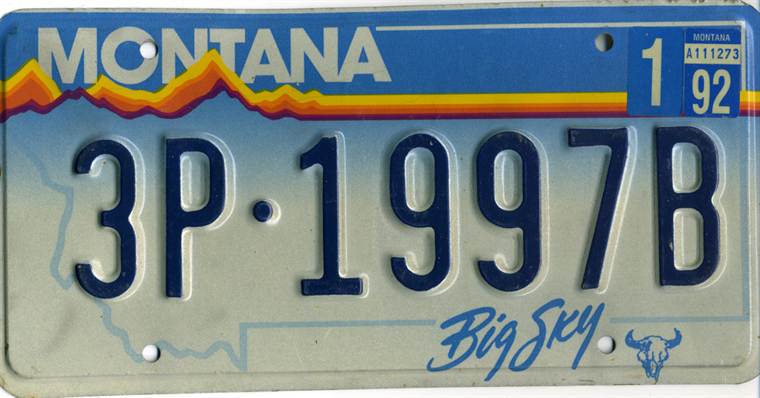
The code sits in the same spot on every standard plate, from the oldest run to the newest. A collector can line up a 1976 plate next to a 2026 plate and read the county from the same position on both. A county that moved its offices or merged a district keeps the same code through it all. The number on the plate stays put, and the record tracks the change on the state side. That fixed link lets a driver read a plate from any decade with one list. The list runs long, but a driver only needs the low codes for daily use. Most plates on a Montana road open with a single digit, since the crowded counties sit at the front of the order. The two-digit codes show up more often in the rural stretches.
The History Behind the Number Order
The order follows one rule: population. When the state set the list in 1934, it ranked each county by the count from the 1930 census and handed out the codes from there. Silver Bow, the most crowded county at the time, took 1. The counties that trailed took the higher numbers, down to the smallest at 56. That single snapshot froze the list for good. A county that grew later kept its old code, so a busy county today can still hold a low number from the 1930s. The state never re-ranked the list, which is why the codes look random to a driver who does not know the history. The rule shapes the list too. The low codes cluster around the old mining and rail towns, and the high codes sit in the wide rural counties. Read the number and you read as much about the state’s past as about the plate in front of you.
What the Serial Tells You
The serial holds no personal detail. It links the plate to the vehicle record, and the county hands out serials in order as owners register. A high serial usually means the county has issued many tags, and a low one comes from the early part of a run. The serial format has shifted over the decades. An early run used digits only, then the state mixed in letters to stretch the range. The current standard format reads as county code, a dash, then a mix of digits and letters, such as 6-96872C. A driver cannot decode the serial into a year or a model, since the number maps to the record rather than to the vehicle build.
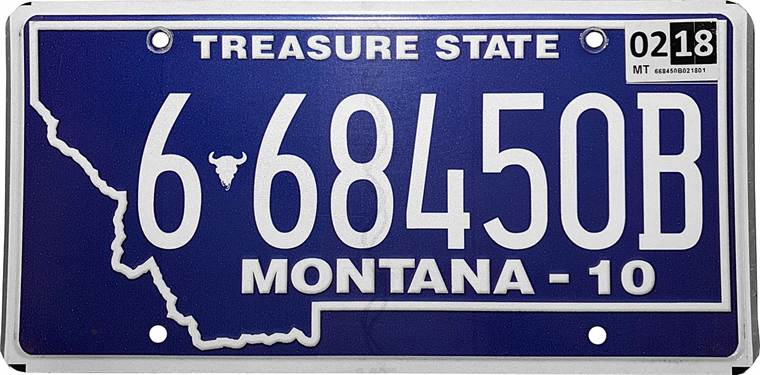
A serial can carry a letter in the middle, at the end or at the front, depending on the run. The state sets the pattern for each batch and prints the plate to match, so no single rule covers every serial shape.
Letters, Digits and the ABC123 Format
Montana runs two number systems side by side. Standard and county plates use the county code plus a serial. Optional, personalized and Centennial replica plates drop the county code and use a plain ABC123 format instead. That split shows why some Montana tags carry no county digit at all. A plate that starts with three letters belongs to the optional family, and the county code does not apply. A driver who wants a county code on the plate picks a standard design rather than an optional one. The personalized family allows a chosen combo, so a driver can pick a phrase or a name. The state screens each request and blocks profanity, duplicate tags and public symbols. A standard combo runs up to seven characters, and a sponsored combo runs up to five.
Why Some Plates Begin With Letters
A few older runs opened with a letter inside the county block too. The state used that pattern to extend a range once the all-digit serials ran out. A plate from the 1991 run can read as county code, then a letter, then the rest of the serial, such as 3P-1997B. Those letter-first serials still follow the county rule on the left side. The county code stays put, and the letter sits inside the serial. Read the plate from the left and the county still comes first. A truck or commercial plate can add a class letter of its own. The letter marks the vehicle class, and the county code stays in front of it. Two plates from the same county can look different on the right side and still share the same county digit on the left.
How a County Assigns Serials
Each county works through its own block of serials. When an owner registers a vehicle, the county treasurer pulls the next number in the block and ties it to that record. No two vehicles in the same county share a serial at the same time, and the order runs from low to high as the years pass. The block can run out. Once a county reaches the top of its range, the state opens a fresh pattern that mixes in letters to stretch the count. That shift leaves a visible seam in the records, since an all-digit serial gives way to a serial with a letter inside it. A plate that moves to a new vehicle keeps its serial when the county transfers it. The county updates the record and the old number follows the plate, not the car. That path shows why a serial can sit on a truck for a decade and then move to a car.
Where the County Code Sits on the Plate
The county code takes the left edge, and nothing else shares that space. The serial fills the center and the right, and the state name runs across the top or the bottom. A slogan such as TREASURE STATE sits above the serial on the current design. Tabs for the month and year sit in the corners on most designs. The tabs mark a valid registration, and they do not touch the county code. A driver who reads a plate from left to right meets the county first, then the serial, then the tabs.
Plate Format by Vehicle Type
Montana numbers each vehicle class on its own path. A Montana license plate types breakdown shows how the families differ, and the number layout shifts with the class.
| Plate class | Serial layout | County code |
|---|---|---|
| Passenger standard | County code, dash, mixed digits and letters | Yes |
| Optional and personalized | ABC123 or a seven-character combo | No |
| Motorcycle | County code, dash, four or five characters | Yes |
| Trailer | County code, dash, short serial | Yes |
| Truck and commercial | County code, dash, serial with a class letter | Yes |
| Centennial replica | ABC123 | No |
Most Used County Codes
The low codes appear on the road far more often than the high ones, since they belong to the most populated counties. These ten cover a large share of the plates a driver passes in a week.
| Code | County | County seat |
|---|---|---|
| 1 | Silver Bow | Butte |
| 2 | Cascade | Great Falls |
| 3 | Yellowstone | Billings |
| 4 | Missoula | Missoula |
| 5 | Lewis and Clark | Helena |
| 6 | Gallatin | Bozeman |
| 7 | Flathead | Kalispell |
| 8 | Fergus | Lewistown |
| 9 | Powder River | Broadus |
| 10 | Carbon | Red Lodge |
The full run of 56 codes sits on the county code page, paired with each county seat. A driver who sees an unfamiliar high code, such as 46 for Granite County, can look it up there in one step.
How the Code Helps a Buyer
A used-car buyer can read the county code to place a vehicle in the state. A plate from a rural county with a low plate count can point to a farm truck or a long-held vehicle, and a plate from a busy county can point to a daily driver. The code gives a hint, not a verdict. The code pairs well with a plate search. A buyer reads the county from the plate, then checks the vehicle record and the registration status. The Montana registration fee breakdown shows what the owner pays each year, which helps set a fair price on the whole deal. A seller can lean on the same reading. A plate from a county that keeps careful records can move a deal faster, since the buyer trusts the paper trail. A buyer who spots a mismatch between the plate and the paperwork should walk away until the record clears. The county code stays fixed through a sale. A new owner keeps the plate and the serial when the county transfers the record, so the tag still points to the same county. That link makes a plate search reliable long after the first registration.
Reading an Old Montana Plate
Older plates use the same logic with a different look. A 2004 design carries the county code in the same spot, and the serial follows the same order. A collector who buys an old plate can decode the county without any tool, since the opening digits have not changed in nine decades. The code list itself has stayed almost fixed. The state added a county or two to the roster over the years, but the founding order from 1934 still drives the numbers. That stability makes an old Montana tag easy to place next to a new one.
Numbers on Motorcycle and Trailer Plates
A motorcycle plate carries a short serial, and the county code still leads. The face is smaller than a passenger plate, so the state trims the serial to four or five characters. A tag can read as county code, a dash, then a short mix of digits and letters. A trailer plate follows a similar path. The county code sits at the left, and a compact serial fills the rest. A utility trailer and a travel trailer can share the same county code and still carry different serials, since the county draws from the same block for both. An apportioned truck plate splits the number across states. The plate shows a base and a fleet number rather than a plain county serial, and the record tracks the miles driven in each state. A driver who reads one of these tags finds a fleet code in place of the usual county block.
Codes That Trip Up New Drivers
Two cases catch new drivers off guard. The first is a plate with three letters at the front, which belongs to the optional family and carries no county code. The second is a plate with a letter inside the serial, which still keeps the county code on the left. A third case comes from the Centennial replica plate. It copies the 1987 look and uses an ABC123 serial with no county digit. A driver who tries to read a county from it finds nothing, since the design never carried one. Read the left edge first in every case. A digit means a county code, and a letter means the plate belongs to the optional or replica family. That single check settles most confusion on the spot.
Frequently Asked Questions
These five questions come up most often when a driver tries to read a Montana tag. Each answer stays short so the point lands fast.
What do the numbers on a Montana license plate mean?
The leading one or two digits mark the county that issued the tag. The rest of the serial is unique inside that county block, so two plates from the same county never repeat a number.
How many counties does the Montana code list cover?
The list runs from 1 to 56, one code per county. Silver Bow holds code 1, and Lincoln holds code 56 at the end of the order.
Why does my Montana plate have no county number?
Optional, personalized and Centennial replica plates use an ABC123 format instead of a county code. Pick a standard design if you want the county digit on the plate.
Can I decode the serial into a vehicle model?
No. The serial links to the vehicle record held by the state, and it does not spell out the make, model or build year. Order a motor vehicle record for those details.
Where do I look up an unfamiliar county code?
Match the opening digits against the full county code list. The Montana plate lookup walkthrough shows how to pair the code with a plate search.