
Montana replacement license plates run $10 when the metal is mutilated or destroyed, and $15 when the owner asks the duplicate to keep the same number and background as the old tag. The owner files a sworn declaration at the county treasurer’s office, pays the fee, and the county issues the new set. A single plate, a full pair and a duplicate registration decal all move through the same section of the code.
Montana plate replacement covers a lost plate, a stolen plate and a plate bent through a winter of road salt. This page sets out the exact fee, the sworn declaration the county asks for, the difference between a replacement and a reissued set, and how to keep the same serial when the old tag comes off.
How to Replace a Montana License Plate
A replacement starts at the county treasurer’s office for the county that holds the record. Bring the plate if you still have it, the registration card or the renewal notice, a photo ID, and proof of insurance where the county asks. The clerk files a sworn declaration that the plate was mutilated or destroyed, records the vehicle identification number, and collects the fee. The county then issues the replacement set and hands over the paperwork for the record.
- Report — tell the county the plate is lost, stolen or damaged.
- Declare — sign the sworn declaration at the counter.
- Pay — $10 for a replacement set, or $15 to keep the same number.
- Mount — the county issues the new plate, and the serial follows the fee.
https://mvdmt.gov/license-plate-information/The county handles the file in one visit in most cases, and the new plate can be printed at the office. A county that does not print on site mails the set, and a driver waits a few days for the metal. A temporary permit is not needed for a replacement, since the registration stays live on the record as the new tag is prepared.
What the Replacement Costs
The statute sets two figures for a replacement. Section 61-3-333 sets a $10 fee for a replacement set, a single replacement plate or a duplicate registration decal, and a $15 fee when the owner asks the new plate to bear the same background and number as the old one. Of the $10 fee, $2 goes to the state general fund and the rest to the account set for plate work.
| Line | Figure | When it applies |
|---|---|---|
| Replacement set or single plate | $10 | Plate mutilated or destroyed |
| Duplicate with the same number | $15 | Owner keeps the old background and serial |
| Duplicate registration decal | $10 | Decal lost or damaged |
| New set of standard plates | $12 | A new set is issued under the state fee table |
| Keep a pre-2010 number at reissuance | $16 | Optional number hold at a required replacement |
A few drivers confuse a replacement with a new set. A replacement covers a plate that was lost, stolen or damaged, and it runs $10 or $15. A new set of standard plates issued under the fee table runs $12, and it applies at a first registration or a required reissuance rather than at a lost plate. The Montana registration fee breakdown lists both lines next to the other charges.
Lost, Stolen or Damaged
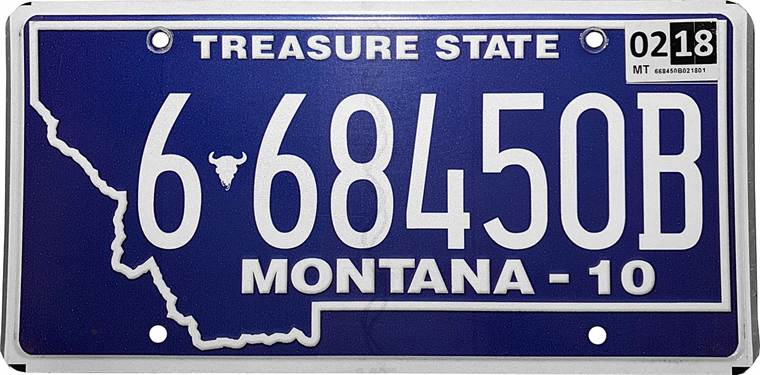
A lost plate and a stolen plate take the same fee, and the difference sits in the report. A stolen plate should go to the police first, since a tag in the wrong hands can draw a stop far from home. The police report number then goes on the county file, and the record notes the theft so the old serial is flagged if it turns up. A damaged plate follows the same path without a police report. A plate bent at the corner, cracked through a bolt hole or faded past reading is a plate the state asks the owner to replace rather than straighten. A driver who bends a plate back into shape leaves a weak spot, and the metal can crack on the next pothole. A driver who loses one plate of a pair should expect the county to issue a matched set rather than a single tag. A pair reads as a matched set on the road, and a single new plate next to an old one leaves two faces with different wear. The county confirms whether a single plate or a pair applies to the vehicle.
The Sworn Declaration
The sworn declaration is the core of the file. Section 61-3-333 asks the owner to state that the plate or decal was mutilated or destroyed, and the county keeps that statement with the record. The declaration protects the state if an old tag turns up on the road, since the owner has put the facts in writing. A driver who signs the declaration should keep the facts straight. A plate that was lost on a trail is lost, and a plate that was taken from a parking lot is stolen. The county files the statement as written, and a false declaration can carry its own charge. Tell the clerk what happened in plain terms. A driver who finds the old plate after the replacement should return it to the county rather than keep it on a shelf. An old tag can end up on another vehicle, and the record ties the serial to the owner. Hand the old metal to the county and let the office void it, since a plate that sits in a garage can turn up years later in a file that points back to the owner.
Keeping the Same Number
A driver who wants the same serial pays $15 rather than $10. The county reprints the plate with the same background and number, so the tag on the vehicle does not change. That choice appeals to a driver who has held the number for years or who runs a personal combo on the face. A personal combo does not survive a replacement that takes a new serial, so the owner pays the higher fee to hold the combo. The Montana personalized license plates page covers how a combo sits on the face and how the county files it. A driver who holds a combo should ask for the same-number option at the counter. A driver who takes the lower fee gets a fresh serial, and the county issues a plate with a new number. The old number then returns to the state pool in time. A driver who does not care about the serial saves $5 and takes the fresh tag.
The Front Plate on a Two-Plate State
Montana asks most vehicles to carry a plate on the front and the rear, so a lost front plate leaves the vehicle out of step with the rule. A driver who loses the front tag should replace the set rather than run with a bare bumper. An officer who sees one plate on a two-plate vehicle has grounds for a stop, and the citation follows. A driver who holds a single-plate class, such as a motorcycle or a trailer, replaces the one tag and skips the pair. The Montana front license plate laws page sets out which vehicles carry two plates and which carry one. A driver who is unsure should ask the county office when the replacement is filed.
Reissuance and the Five-Year Cycle
The state reissues standard plates on a five-year cycle, and the office mails a notice when a set is due. A replacement filed inside the cycle carries the same $10 or $15 fee as any other. A driver who wants a fresh set outside the cycle pays the fee rather than waits for the notice, and the county files the request the same day. A driver who keeps a number issued before January 1, 2010 pays an extra $16 at a required replacement. That figure rides on top of the $12 for the new set, and it holds a serial the state would otherwise retire. The county notes the choice on the file at the counter. A replacement does not change the registration date, the county code or the vehicle class. The record keeps its renewal month, and the new plate carries the same county code when the owner holds the number. The Montana license plate renewal page covers the notice schedule the office follows.
Replacing a Plate on a Trailer or Motorcycle
A trailer and a motorcycle carry one plate, so the replacement is a single tag rather than a pair. The owner files the same sworn declaration and pays the same $10 or $15 fee. The county issues the single plate with the county code at the left edge, and the serial follows the fee the owner chose. A trailer plate that fades through a winter of storage is a frequent replacement, and the owner can wait for the spring thaw to file. A motorcycle plate that bends in a drop is another, and the rider can swap it the same week. The record stays live on both classes, so neither needs a temporary permit during the wait. A travel trailer and a semitrailer follow the same path, and the county reads the class before it issues the tag. A driver who holds a matched pair on a two-plate vehicle files a set rather than a single tag, and the county issues both faces at one visit.
When the County Cannot Find the Record
A record that a clerk cannot find on the first look is usually a record held by another office. The county code on the plate names the office that opened the file, and a plate that opens with a high number may sit with a county far from the current address. The clerk can pull the record from the state system once the vehicle identification number is in hand. A driver who has moved to another county keeps the record with the county that issued the plate, and the replacement files there. The driver does not need to return in person for a replacement, since many counties take the sworn declaration by mail. A quick call to the issuing office settles what the file needs. A vehicle that changed hands carries the record under the new owner, and the replacement files in the new owner’s name. The Montana county code list names each office, and the state lookup can confirm the county that holds the file before the drive.
Decals and Year Tabs
A registration decal covers the plate itself, and a lost or damaged decal takes a replacement of its own. Section 61-3-333 folds a duplicate decal into the same $10 fee as a replaced plate. The county issues a fresh decal and notes the issue on the record, and the owner mounts it in the same spot as the old one. A driver who replaces a plate usually takes a fresh decal at the same time, since the new tag arrives bare. The county prints the decal with the current registration date, and the owner places it where the old decal sat. Keep the decal clear of the bolt holes so it stays whole through the winter. A decal that peels in the cold can be swapped at the county office for the same $10 fee. A driver who waits risks a stop for a plate with no readable tab, and the citation follows. A quick visit in the fall keeps the tag readable through the road-salt months.
Buying a Vehicle with a Missing Plate
A buyer who takes a vehicle with no plate on the rear faces two steps rather than one. The buyer titles the vehicle and registers it in the buyer’s name, then the county issues a fresh plate under the fee table. A seller should remove the old plate at the sale under Section 61-3-334, so a plate on a sold vehicle is a sign the transfer paperwork is not finished. A vehicle that arrives with a bent or faded plate can take a replacement at the same visit as the registration, and the $10 or $15 fee rides on the bill. A buyer who wants the seller’s old number cannot hold it, since the number ties to the seller’s record rather than the vehicle. The county opens a fresh serial for the buyer at the standard fee. A buyer should match the plate, the title and the vehicle identification number on the frame before the money changes hands. The Montana plate lookup walkthrough shows the steps from tag to record, and the county treasurer confirms the title is clean before the transfer closes.
Frequently Asked Questions
These five questions come up most often around a Montana plate replacement. Each answer stays short so the point lands fast.
How much does it cost to replace a Montana license plate?
A replacement set, a single replacement plate or a duplicate decal costs $10. If you ask the new plate to keep the same background and number, the fee is $15.
Can I keep the same plate number when I replace a plate?
Yes. The county reprints the plate with the same background and serial for a $15 fee. Without that request, the county issues a fresh number at the $10 fee.
What do I bring to replace a lost plate?
Bring a photo ID, the registration card or renewal notice, and proof of insurance where the county asks. The clerk files a sworn declaration that the plate was lost, stolen or damaged.
Should I report a stolen plate to the police?
Yes. Report the theft to the police first, then file the replacement at the county office. The report number goes on the record, and the old serial is flagged if it turns up.
Does a replacement change my renewal date?
No. The record keeps its renewal month and its county code. The new plate carries the same county code when you hold the number, and the registration date stays the same.